

What Is The Autoimmune Protocol? The Complete Guide to AIP (Updated 2026)
The Autoimmune Protocol (AIP) is one of the most widely recognized frameworks for managing autoimmune disease with food and lifestyle.
Autoimmune disease is rising at a pace never seen before. For millions of people—mostly women—their symptoms arrive without warning and often without answers. Diagnosis can take years. Treatment can help but doesn’t always resolve symptoms. And in that space of confusion and uncertainty, many people begin looking for something more structured, empowering, and personally responsive. That’s where the Autoimmune Protocol (AIP) comes in.
Over the last decade, AIP has gone viral across patient communities and clinical settings. It has been tested in published medical research, adopted by trained healthcare providers, and used by thousands of people to understand their symptoms, reduce inflammation, and improve quality of life. But with its popularity came something else: confusion. There are outdated versions of AIP, overly restrictive lists circulating online, and misconceptions that make the protocol feel more intimidating than it needs to be.
This article cuts through that noise and delivers the current, evidence-informed, updated understanding of AIP—what it is, how it works, and how to decide whether it might be right for you.
What You’ll Learn in This Guide
- Autoimmune disease is increasing and why people are turning to AIP
- The true origin story of the Autoimmune Protocol
- What AIP actually is (and what it isn’t)
- A full explanation of the three phases of AIP: Transition, Elimination, Reintroduction
- How the 2024 update created two versions of the Elimination Phase: Core and Modified AIP
- What medical research using AIP show using the protocol for IBD, Hashimoto’s, RA, and more
- Common myths and controversies about AIP
- How to decide if AIP is a fit for your health goals
Why Autoimmune Patients are Using the Autoimmune Protocol
An Autoimmune Epidemic and Lack of Treatment Options
Autoimmune disease includes more than 100 conditions—Hashimoto’s thyroiditis, rheumatoid arthritis, lupus, psoriasis, multiple sclerosis, inflammatory bowel disease, and many others. Together, they are now among the most common chronic illnesses worldwide.
Despite how widespread autoimmune disease is, many people experience:
- Long delays in diagnosis
- Symptoms dismissed as stress, anxiety, or “normal” lab variation
- Medications that help but don’t fully resolve symptoms

If you’re here, you may know this story personally, like I do. In my twenties, before I became a nutritionist and author, I was navigating unexplained fatigue, pain, anxiety, and hair loss. After finally being diagnosed with Hashimoto’s and celiac disease, I was told to “wait and see” as my symptoms grew worse. I began searching for something—anything—I could implement myself. That search led me to the earliest version of the Autoimmune Protocol, a grassroots experiment shared by a small online community.
What I found was not a “cure”, but a framework that restored a sense of direction at a time when everything felt chaotic. That early experience is what eventually led me to create recipes, publish books, study nutrition formally, and help bring AIP into clinical research settings.
The Origin of the Autoimmune Protocol
From Grassroots Experiment to Global Movement
What we now recognize as the Autoimmune Protocol began around 2011, when a small group of autoimmune patients started comparing notes online.
Back then:
- There was no official protocol
- Food lists were crowdsourced
- People were experimenting out of necessity
- There were scant recipe resources
- Research on diet and autoimmunity was limited
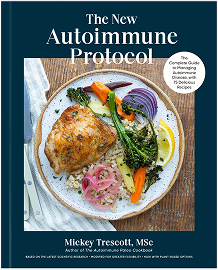
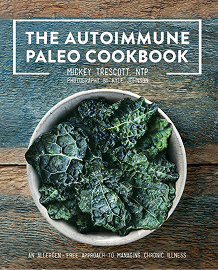
I was part of this early community, working as a personal chef. As people asked, “Okay, but what do I actually cook?”, I began developing recipes that fit the emerging framework. Those recipes eventually became The Autoimmune Paleo Cookbook, the first title dedicated entirely to AIP.
Around the same time, scientific discussions around gut health, immune activation, and dietary triggers began expanding. Researchers like Dr. Sarah Ballantyne helped build the first coherent, theoretical version of AIP that aligned with immunology and digestive physiology. The community grew rapidly—by 2015, my website was reaching millions of readers annually, and healthcare providers were using AIP with their patients.
Then something remarkable happened: clinical researchers took interest. Teams at Scripps San Diego launched the first pilot studies on AIP for inflammatory bowel disease. These were followed by studies on Hashimoto’s thyroiditis, rheumatoid arthritis, and psoriasis. Suddenly, a grassroots experiment had become a global movement grounded in community experience and emerging evidence.
What AIP Actually Is (and What It Isn’t)
Let’s start with the simplest, most accurate definition: AIP is an evidence-based framework that helps people with autoimmune disease identify which foods and lifestyle factors support or hinder their health.
AIP is not a diet to follow forever—it is a phased learning process. People often misunderstand AIP as a long term, restrictive diet, a list of forbidden foods, a trend, or a cure for autoimmune disease. But AIP is none of those things.
Instead, AIP is a temporary, structured, step-by-step system designed to help you learn how your unique body responds to food and lifestyle patterns. At the end of the process, you eat the most expansive, sustainable diet possible that still supports your health.
The Three Phases of AIP
The AIP unfolds in three phases. First is the Transition Phase, where you prepare your mind, kitchen, and routines for success. Next is the Elimination Phase—Core or Modified AIP—where you remove common triggers and focus on nutrient-dense foods. Finally, the Reintroduction Phase helps you systematically test foods to build a personalized long-term diet.
Most people complete the full process in about six months, though the timeline is flexible.
Phase One: The Transition Phase
Most people want to jump straight into elimination—but preparation is what determines long-term success. There are five fundamental steps to the transition phase:
- Track Your Baseline Symptoms: Document your energy, digestion, pain, sleep, skin health, and mood. This gives you meaningful before-and-after comparisons.
- Clarify Your Motivation: Define why you’re doing this. When things feel hard, your “why” helps bring you back to center.
- Assess Your Readiness: Look at: Schedule, budget, support, cooking skills, and stress levels. Realistic planning prevents burnout.
- Stock Your Kitchen and Practice Recipes: Begin adding nutrient-dense AIP foods and practice a few new meals before you remove anything.
- Set a Start Date: Choose a stable period in your life. A two- to four-week transition period is ideal.
Why focus on transition: People who prepare thoughtfully feel more confident, less overwhelmed, and more capable of sticking with the elimination phase long enough to gather useful data.
Ready to begin? My in-depth guide to The AIP Transition Phase will help you plan your shift with clarity and confidence.
Phase Two: The Elimination Phase
When people think of AIP, they usually think of this phase. This is the main component of AIP, where you temporarily avoid the foods most likely to provoke an immune response while focusing on nutrient-rich staples. As of 2024, there are now two options for elimination:
- Core AIP Elimination: The original version used in medical research and early AIP literature. This is the most comprehensive approach and removes categories such as grains, legumes, dairy, processed foods, and nightshades.
- Modified AIP Elimination: A less restrictive option developed in 2024 to improve accessibility and sustainability. It reduces the number of eliminations while still emphasizing nutrient density and lifestyle practices.
Whichever version you choose, the elimination phase typically lasts 30–90 days — long enough for inflammation to calm and for you to notice meaningful symptom improvement. Importantly, AIP also emphasizes lifestyle strategies during this phase, such as prioritizing sleep, managing stress, and staying active in gentle, supportive ways.
The elimination phase can feel like the biggest leap, but you don’t have to figure it out alone. Explore my detailed guide to The AIP Elimination Phase for food lists, meal planning tips, and more.
Phase Three: The Reintroduction Phase
Reintroduction is where everything comes together. After 1–3 months of elimination—when symptoms have stabilized—you begin systematically reintroducing foods. This phase answers:
- What foods are truly problematic?
- What foods are perfectly tolerated?
- What foods fall somewhere in between?
This is where AIP comes full circle. Foods are reintroduced methodically, one at a time, so you can observe your body’s response. This process allows you to build a personalized diet that includes as many foods as possible without worsening symptoms. The goal isn’t to stay restricted, but to find your own balance.
Reintroductions are where the magic happens — this is where you expand your diet and discover your personal balance. My in-depth guide to The AIP Reintroduction Phase will walk you through it step by step.
How AIP Works
AIP is not magic—it’s physiology. A growing body of AIP Medical Research, including studies across multiple autoimmune conditions, points to the same conclusion: the protocol works because it supports five key mechanisms in the body:
Identifying triggers
One of the most valuable outcomes of AIP is learning which foods worsen your symptoms and which you tolerate well. By temporarily removing the foods most likely to trigger immune reactivity and then reintroducing them one at a time, you gain clarity about your own unique sensitivities. This allows you to make informed choices moving forward, rather than relying on guesswork or one-size-fits-all dietary advice.
Correcting nutrient gaps
Nutrient deficiencies are common in autoimmune patients and can directly impact immune function. AIP emphasizes nutrient-dense foods like vegetables, seafood, organ meats, and fermented foods. In one clinical study on Hashimoto’s thyroiditis, patients following AIP dramatically increased their intake of key nutrients: vitamin C intake rose by 886%, beta-carotene by 550%, folates by 198%, and fiber by 162% — all without reducing total calories [6]. This kind of nutritional upgrade supports healing, reduces inflammation, and provides the immune system with what it needs to function optimally.
Managing inflammation
Chronic inflammation is one of the hallmarks of autoimmune disease. AIP helps reduce it from both sides: removing inflammatory triggers while also adding foods rich in anti-inflammatory compounds. Clinical studies show reductions in inflammatory markers, such as a 29% decrease in hs-CRP in Hashimoto’s patients [5], as well as improvements in fecal calprotectin (a marker of gut inflammation) in IBD patients [1].
Supporting gut and immune balance
Emerging research suggests that AIP can even shift immune responses at the molecular level. In one study of ulcerative colitis patients, researchers identified 324 genes that changed expression after following AIP [3]. Genes linked to inflammatory T-cell activity were dialed down, while those tied to immune regulation, mucosal healing, and DNA repair were dialed up. This suggests that AIP may not only reduce symptoms but also positively influence immune function at its root.
Because of these shifts, people commonly report clearer energy, improved digestion, fewer flares, better mood stability, and a greater sense of control over their symptoms. AIP is not a cure for autoimmune disease—but it helps restore a more stable, supported foundation so the body can function as well as possible.